



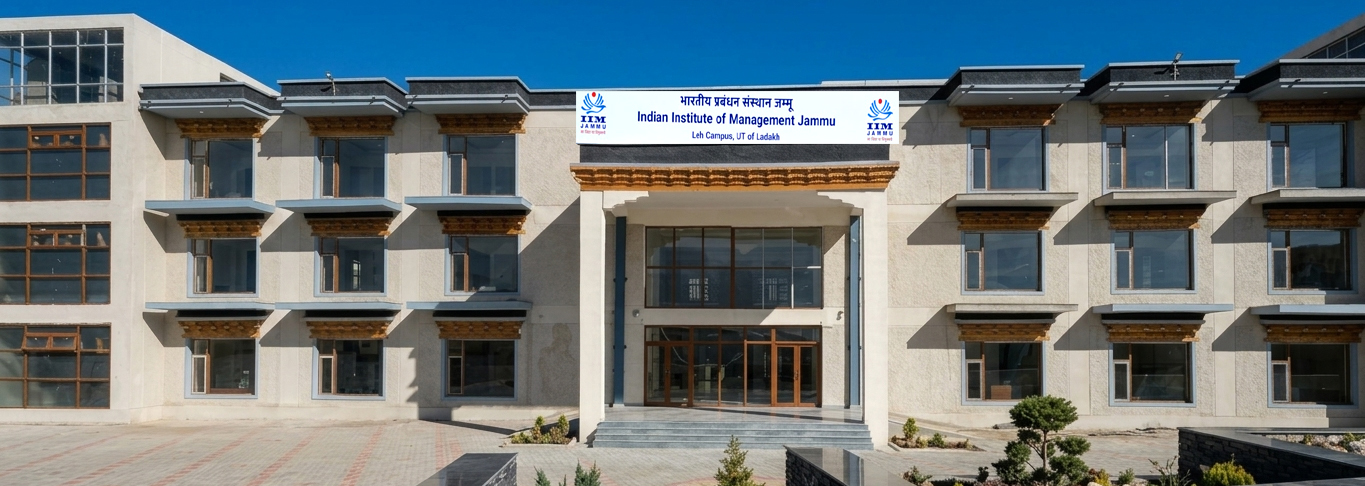
BBA at Leh
NEW LAUNCH ⚡ BBA (Hons.) · IIM Jammu — Leh Campus, Ladakh ✦ 4 Yrs · 8 Sem · Residential ● Management & Business Foundation ✦ Analytical · Communication · Leadership · Practical ● Classroom + Internships + Experiential ✦ 🚀 Diverse Careers & Higher Studies Apply Now ● NEW LAUNCH ⚡ BBA (Hons.) · IIM Jammu — Leh Campus, Ladakh ✦ 4 Yrs · 8 Sem · Residential ● Management & Business Foundation ✦ Analytical · Communication · Leadership · Practical ● Classroom + Internships + Experiential ✦ 🚀 Diverse Careers & Higher Studies Apply Now ●

About IIM Jammu Leh Campus

In a significant step towards expanding access to quality management education in Ladakh, the Administration of the Union Territory of Ladakh and IIM Jammu signed a Memorandum of Understanding (MoU) on 26 September 2026 for the establishment of an IIM Jammu campus at Leh, in the presence of Lieutenant Governor Shri Vinai Kumar Saxena and other dignitaries.

The new campus is envisioned not only as an academic institution but also as a Centre for innovation, entrepreneurship, professional development and knowledge creation. This initiative will play an important role in developing a skilled, capable and future-ready workforce in Ladakh.

Located in Leh, the Campus provides a distinctive learning environment shaped by the rich cultural heritage, unique geography, and evolving socio-economic landscape of Ladakh. Through quality education, industry and community engagement, and a focus on innovation and entrepreneurship, IIM Jammu – Leh Campus aims to contribute to the development of capable, responsible, and socially conscious leaders.

The Leh Campus represents IIM Jammu's commitment to inclusive and accessible management education and to nurturing talent that can contribute meaningfully to the development of Ladakh and the nation.

2.1

General Guidelines

The season in Leh and the surrounding Ladakh region is characterized by low temperatures, snowfall, icy surfaces, reduced water availability, and possible disruptions to road and air transportation during winters. All students residing at or travelling to the Leh Ladakh Campus are expected to take appropriate precautions, remain alert to changing weather conditions, and comply with safety instructions issued by the Institute and competent authorities. The following guidelines are intended to promote student safety, health, well-being, and preparedness during the winter season.

2.2

Travelling Advisory

Ladakh is a high-altitude region with extreme weather conditions and limited medical facilities in remote areas. All students are advised to follow these guidelines for a safe, healthy and responsible travel experience.

✅ Do's
1Acclimatize properly: Take at least 48 hours of complete rest upon arrival in Leh before travelling to higher-altitude destinations.
2Stay hydrated: Drink sufficient safe drinking water throughout your stay. Drink 3-4 litres of water daily to stay hydrated at altitude.
3Eat light meals: Prefer light meals during the initial days and avoid overeating.
4Carry essential medicines: Take Diamox (Acetazolamide) 250 mg twice daily starting 2 days before arrival. Keep prescribed medicines and a well-stocked personal first-aid kit.
5Consult a doctor: Seek medical advice regarding altitude sickness prevention and any medication required before travelling.
6Recognize warning signs: Seek immediate medical attention if you experience persistent headaches, nausea, vomiting, dizziness or breathlessness.
7Plan your journey: Check weather forecasts, road conditions and official travel advisories before travelling.
8Keep emergency contacts handy: Save important hospital, police and emergency contact numbers on your phone. (Refer)
9Carry suitable clothing: Use adequate thermal wear and protective clothing, especially during winter.
10Respect local culture: Follow local customs, traditions and rules at religious and cultural sites. (Refer)
11Protect the environment: Keep Ladakh clean and dispose of waste responsibly.
🚫 Don'ts
1Do not rush to high altitudes: Avoid travelling to higher altitudes immediately after arriving in Leh.
2Do not exert yourself: Avoid strenuous physical activity during the first 48 hours of acclimatization.
3Do not consume alcohol or smoke: Avoid both during the initial acclimatization period.
4Do not take sleeping pills or sedatives at high altitude unless specifically advised by a qualified medical professional.
5Do not ignore symptoms: Headache, nausea, vomiting, confusion or breathlessness may indicate altitude sickness.
6Do not continue ascending when unwell: Stop ascending immediately if altitude sickness symptoms develop. Seek medical assistance and descend safely if symptoms worsen.
7Do not travel unprepared: Avoid visiting remote areas without essential medicines, emergency supplies and proper travel planning.
8Do not enter restricted areas without valid permits or violate local travel regulations.
9Do not drink untreated water from streams, rivers or other natural sources.
10Do not skip meals or neglect hydration.
11Do not ignore weather warnings when planning treks, mountain passes or road journeys.
12Do not litter: Avoid plastic waste and any activity that harms Ladakh's fragile ecosystem.
2.3

High-Altitude Health and Acclimatization

✅ Do's
1Follow the Institute's instructions regarding acclimatization, particularly if arriving from a lower-altitude location.
2Allow adequate time to adjust to the altitude before undertaking strenuous physical activities.
3Be alert to symptoms such as headache, nausea, dizziness, unusual fatigue, and breathlessness.
4Inform the designated medical personnel promptly if symptoms develop or worsen.
5Seek urgent medical evaluation in the event of breathlessness at rest, confusion, collapse, or impaired coordination.
🚫 Don'ts
1Do not undertake strenuous exercise immediately after arriving at high altitude without following appropriate acclimatization guidance.
2Do not dismiss persistent or worsening symptoms as ordinary tiredness or the normal effect of cold weather.
3Do not attempt to manage a suspected serious altitude-related illness without medical assistance.
4Do not remain alone when experiencing significant symptoms that may affect your safety.
2.4

Winter Clothing and Personal Protection

✅ Do's
1Wear adequate winter clothing, including thermal innerwear, insulated jackets, warm trousers, woolen socks, gloves, caps, and scarves, as appropriate to the prevailing conditions.
2Use insulated, weather-appropriate footwear with good grip to minimize the risk of slipping on snow or icy surfaces.
3Protect exposed skin from extreme cold and wind, particularly during outdoor movement.
4Keep essential winter clothing and accessories readily accessible, including during travel and emergency situations.
5Dress in layers so that clothing can be adjusted according to indoor and outdoor temperatures.
6Check weather advisories before undertaking outdoor activities or travel.
🚫 Don'ts
1Do not underestimate the severity of winter conditions or remain outdoors for prolonged periods without adequate protection.
2Do not wear wet clothing or footwear for extended periods in cold conditions.
3Do not walk on icy surfaces in smooth-soled footwear.
4Do not undertake outdoor activities in severe weather without appropriate clothing, authorization, and safety arrangements.
5Do not ignore persistent shivering, numbness, unusual drowsiness, or other signs of cold-related illness.
2.5

Health, Nutrition and Hydration

✅ Do's
1Maintain a balanced diet and consume regular meals to support energy requirements during cold weather.
2Drink adequate water throughout the day, even when the sensation of thirst is reduced.
3Consume warm beverages where appropriate, while ensuring that they are not excessively hot.
4Maintain regular sleep patterns and allow adequate time for rest and recovery.
5Carry prescribed medication and ensure that essential medicines remain accessible during travel or severe weather.
6Seek timely medical advice if you experience persistent cough, fever, breathing difficulties, unusual fatigue, or other concerning symptoms.
7Inform the officials of IIM Jammu in case of any relevant health concerns that may require assistance during severe winter conditions.
🚫 Don'ts
1Do not neglect meals or reduce fluid intake because of cold weather.
2Do not self-medicate or change prescribed medication without appropriate medical advice.
3Do not ignore symptoms of hypothermia, frostbite, or other cold-related illnesses.
4Do not assume that being physically fit eliminates the risks associated with extreme cold or high altitude.
5Do not delay seeking medical attention when symptoms are severe, persistent, or worsening.
2.6

Student Responsibility and Compliance

1 All students are expected to exercise personal responsibility, remain vigilant, and cooperate with the Institute's winter preparedness and safety arrangements.
2 Absence from campus (Hostel/Academic Block) without permission will be considered as "Unauthorized Absence" and strict disciplinary actions in accordance with this Handbook will be initiated which may include termination from the program.
3 Failure to comply with applicable safety instructions, unauthorized use of hazardous heating equipment, tampering with fire safety systems, or other conduct that endangers students, staff, or campus property may be dealt with in accordance with the applicable Institute rules and disciplinary procedures.
4 Students are encouraged to report safety concerns promptly and seek clarification from the hostel administration, Program Office, medical personnel, or other designated authorities whenever required.
5 Important: In an emergency, personal safety must take priority. Students should move away from immediate danger, contact the designated emergency services or campus authority, and follow official instructions.
6 These guidelines shall be read in conjunction with the Student Handbook, applicable hostel rules, campus safety procedures, medical advisories, and instructions issued by the Institute from time to time.
7 In case of violations, strict disciplinary action including termination from the program may be initiated.